Kitchen Countertops, Matched to You
The right countertop is the one that matches how you actually cook, clean, and live — not the one that photographs best. Here is how each material behaves in a real kitchen.
Kitchen Countertops Hub
Match the counter to the cook
Start with three honest questions: how much do you cook, how much mess can you tolerate, and how do you feel about upkeep? A household that rolls dough weekly, hosts often, and wipes up fast has different needs than one that mostly reheats and wants zero maintenance.
Also weigh who uses the kitchen. Small children and red wine call for forgiving surfaces, while a serious home baker may prize heat tolerance and a cool pastry surface. Write down your top three daily kitchen habits before you shop — they narrow the field faster than any showroom tour.
Quartz: the low-fuss workhorse
Engineered quartz pairs crushed stone with resin for a surface that resists stains, needs no sealing routine, and comes in remarkably consistent patterns. For busy households that want a clean look without upkeep rituals, it is the easiest material to live with.
Its limits are heat and pattern. Quartz can scorch under a screaming-hot pan, so trivets stay part of the routine, and its veining repeats in ways natural stone does not. If you want a one-of-a-kind slab, look at granite. If you want predictable beauty with minimal care, quartz earns its popularity.
Granite: natural pattern, honest upkeep
Granite is cut from real stone, so every slab carries its own veining and mineral variation — no two kitchens look alike. It handles heat better than engineered surfaces and shrugs off knives and hot pans in ways softer materials cannot.
The trade is upkeep. Granite is porous, so periodic sealing keeps stains from settling in, and lighter colors show that need sooner. Ask your fabricator about the sealing routine for the exact slab you choose, and decide whether that ritual fits your household or will quietly lapse.
Butcher block: warmth you maintain
Wood counters bring warmth no stone can match, and they are the only surface you can sand back to new when knife marks and stains build up. For bakers and cooks who love a tactile workspace, butcher block feels like part of the cooking, not just a platform for it.
Wood and standing water are enemies, so sink runs and dishwasher edges need attention: wipe up promptly, keep the finish fed with oil, and accept that the surface will show its life. Households that enjoy a little routine upkeep love it. Households that want to forget the counter exists should pick stone.
Laminate: the comeback budget option
Modern laminate has outgrown its dated reputation: realistic stone and wood patterns, better edge treatments, and a price that leaves room in the budget for cabinets or appliances. For a starter home, a rental kitchen, or a planned future upgrade, it is a sensible pick.
Laminate's weaknesses are heat and water at seams. A hot pan can scorch it, and a failed seam near the sink lets moisture into the core. Choose postformed edges that reduce seams, keep trivets handy, and treat it as a good-value surface with a finite life rather than a forever material.
Sinks, edges, and seams: the details that decide durability
An undermount sink gives a clean look and lets you wipe crumbs straight in, but it demands a solid surface beneath — stone or quartz, not laminate. Edge profiles matter too: a simple eased edge resists chips better than an ornate ogee in a hard-use kitchen.
Seams are where counters fail first, so ask where yours will fall and whether they can hide near the sink or cooktop. A fabricator who walks you through seam placement, sink support, and overhang brackets before cutting is telling you how the counter will live, not just how it will look on install day.
Pairing counters with backsplash and cabinets
The counter does not live alone. Pair a busy veined stone with a quiet backsplash, or a quiet counter with a patterned tile that carries the room's personality. One star per kitchen keeps the eye calm. Two competing patterns fight for attention.
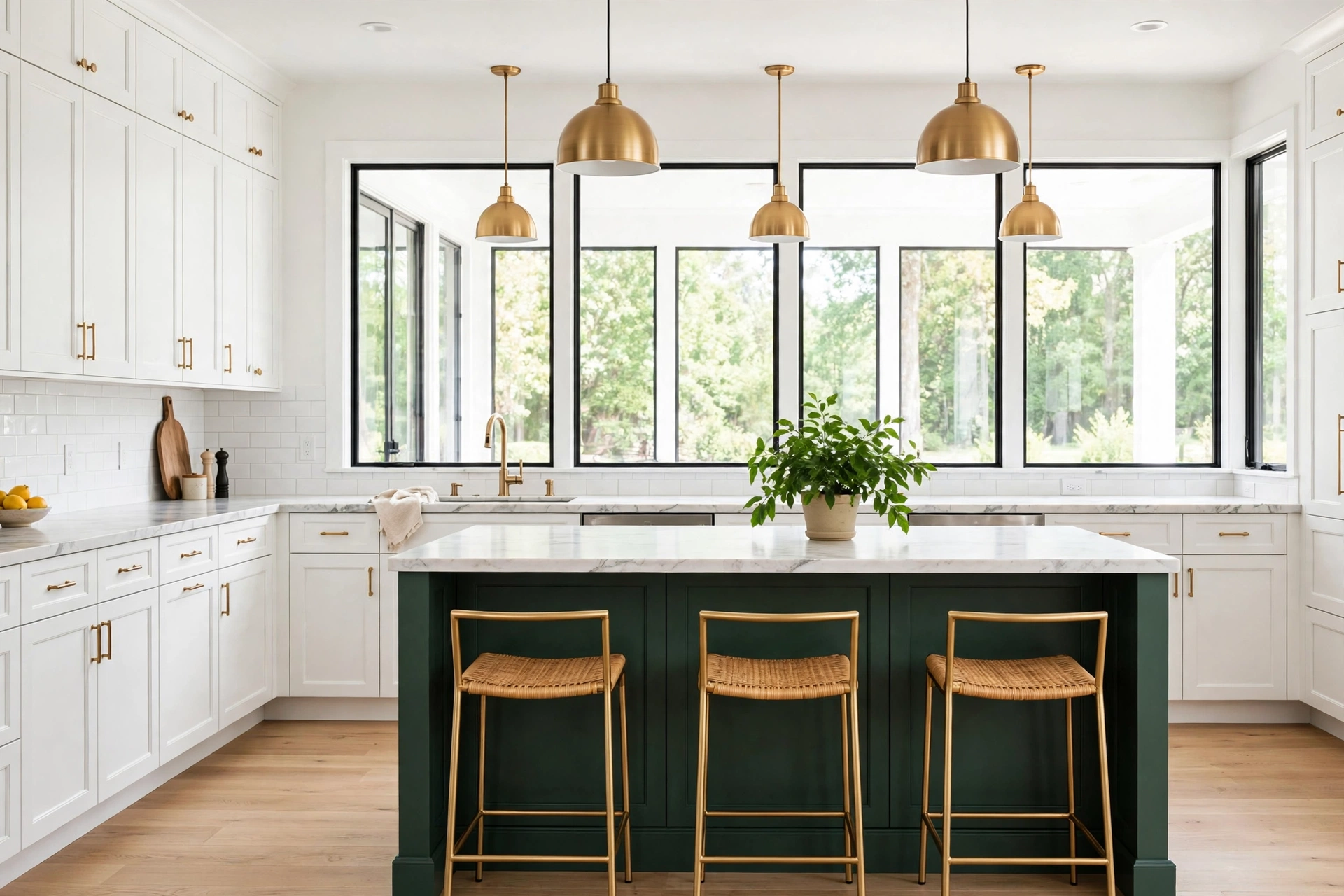
Cabinet color sets the counter's context. White cabinets let veining shine, dark cabinets ask for lighter tops to keep the room bright, and wood cabinets pair naturally with warm stone or butcher block. Bring a cabinet door sample when you choose slabs, and view both together in daylight.
Countertop maintenance by material
Every countertop lasts longer with a routine matched to its material. Quartz asks the least: daily wiping with a mild cleaner and prompt attention to spills. Granite adds a periodic sealing check — sprinkle water on the surface and watch whether it beads or darkens the stone, which tells you whether sealing is due. Butcher block asks for regular oiling to keep the finish fed, and laminate asks mainly for seam awareness near the sink.
Stain first aid is mostly about speed. Blot rather than scrub, use a mild cleaner first, and avoid harsh abrasives on any surface, since a scratched finish stains more easily afterward. For stone, a paste left on the stain can draw out many marks, but test any treatment on a hidden corner first. The habit that protects every material is the same: wipe up promptly, especially wine, coffee, oil, and acidic foods.
Choosing a fabricator, not just a slab
The slab gets the attention, but the fabricator decides how it performs. Templating should happen after cabinets are installed and level, since measuring from plans alone invites gaps. Ask where seams will fall, how the sink cutout will be supported, and what edge finish is included, before anyone cuts stone.
Visit the fabricator's shop or yard when you can, and view your exact slab rather than a sample chip, since natural stone varies far more than a small sample suggests. For small projects, ask about remnants — offcuts from larger jobs that suit a bathroom vanity or a small kitchen at a lower cost. A fabricator who answers these questions patiently is usually the one whose counters still look right years later.
Countertop thickness and overhangs
Thickness changes how a countertop reads. Standard slabs look clean and modern, while a mitered edge — where the fabricator folds the slab edge down — creates a thick, furniture-like profile without the weight and cost of a solid thick slab. Mitered edges suit islands especially well, where the profile is visible from seating height.
Overhangs need support, not hope. A seating overhang beyond a modest depth needs brackets or corbels rated for stone, and the fabricator should confirm the support plan before cutting. Ask how the overhang will be carried, and check that support does not eat the knee room the overhang was meant to create.
Reclaimed and alternative counter materials
Beyond the big four materials, recycled glass counters set chips of glass in a cement or resin base for a speckled, colorful surface, while paper-composite counters press resin-soaked paper into a warm, matte slab. Both suit households that value unusual materials and are willing to accept their quirks.
Reclaimed wood carries history and variation no new material can fake, but it needs the same care as new butcher block and sometimes more, since old boards may hide uneven wear. Alternative materials are worth shortlisting when the standard options feel wrong — just judge them on the same questions of heat, water, stains, and upkeep rather than on novelty alone.
Deeper reading
Guides in this hub
Explore more hubs
More kitchen hubs
Top cities: Louisville, KYColumbus, OHCincinnati, OHDayton, OH
Good to know
Kitchen Countertops Hub FAQs
Engineered quartz is the most forgiving for stains in daily use, since it needs no sealing routine. Granite and butcher block can both stain if spills sit, especially lighter colors and unsealed wood.
Yes, as a routine habit rather than a one-time step. How often depends on the stone and its color — your fabricator can advise for the exact slab you pick.
Quartz tolerates normal cooking heat but can scorch under very hot pans left directly on the surface. Use trivets for pots straight off high heat.
It can be, with prompt wipe-ups and a maintained oil finish. Households that stay on top of water around the sink enjoy it, and those who want zero upkeep should choose stone.
Start with your cabinet color and lighting, then bring samples home. View stone and tile together in your kitchen's daylight before deciding — showroom lighting flatters everything.